Thursday, October 21, 2010

The Circuit, wrote by Francisco Jiménez


Francisco Jiménez wrote the story called “The Circuit”. The story was kind of heartbreaking but it is a good story though. It is also pretty short but it is enjoyable reading material. It’s something that you would continue reading after first page of the story.

            I looked at the Spanish words and to see if I know any of it because I took Spanish class for one semester in my senior year. But unfortunately, I do not know what any of these words means. These words are: ‘Ya esora’, ‘Carcanchita’, ‘listo’, ‘mi olla’, ‘es todo’,’tienen que tener cuidado’, ‘vámonos’, quince’, and ‘carne con chile’.

So I decided to look it up on Spanish to English translation, and the translation may not always be right but you get the idea what it means. ‘Ya esora’ is not translatable, but from what I see, it seems to mean ready or time to go. ‘Carcanchita’ is an affectionate nickname being given to a car. ‘Listo’ means ready, ‘mi olla’ means ‘my pot.’ ‘Es todo’ means ‘that’s all’ in English. ’Tienen que tener cuidado’ means ‘we have to be careful.’ ‘Vámonos’ means ‘let’s go’ and ‘quince’ means ‘fifteen.’ Lastly, ‘carne con chile’ means ‘chili with meat.’

            I am glad that I decided to look it up because it made the story clearer because I now know what these words mean. I want to know why not the boy in the story goes to school right way instead of waiting for the grape season to be over? Why not let his older brother take over the grape picking and let his little brother to go to school? I wonder what happens if they boy did not hide from the school bus? Will his parents get in trouble for it?

            Why would they move to Fresno? Is the economy better there? Why would the boy’s father think that the previous owner of the car is a good man based on the blue necktie? Why would the boy’s mother proud of the old pot and get even more prouder when it get more banged up? That sounds crazy. If it was I, I would have threw it away. I wonder where did the boy’s mother learn English? Is it her native language before she learned Spanish? Why did the author leave the ending like that?

            I thought it was horrible of the man to give the family a run-down garage as a home. It is barely holding itself up and is infested with termites. It talks about drinking too much water could make you sick. I know pretty well about this because I have experienced it when I drank too much after basketball game, I felt horrible because too much water in one drink. Also you could die from drinking too much, it is called water poisoning.

            Also it talked about how the boy was very sore after working all day in the field. That he was sore for a while then finally got used to workload. I could relate to him because I workout everyday in the Field House building. I get sore every time I up the weight, but when I get used to it, then I am not sore anymore. So I totally understand how the boy feels.

            I thought it was wonderful that the boy finally could go to school as a sixth grade student because the grape season is over. The grape season is over in the first week of November. But I felt bad about Roberto not able to go to school because he still has to work in cotton season, which is not over until February. It was sad that the boy was so overwhelmed in the class because he knows only basic English. I thought the teacher was very nice to help him with English and this made the boy excited to go back to school because he knows that he is going to learn something new.

            I was very disappointed with the end of the story because the boy was so excited that he goes to that school and that he is going to learn music. Which is corridos, it is frequently used in Mexico by everyone. He was so excited that he wanted to tell the good news to his parents but he was let down in the end. Why? When he arrived back home, what he gets is that everything is packed again, this means that he is moving again. I thought it was horrible for him because he only got a taste of middle school for one day.

            I learned a lot from this book, mostly on Spanish words and terms. Also learning the name of chili and music that Mexicans eat and uses. I gained little more knowledge of Spanish words, I am planning to take Spanish as my class next semester and this is a good way to start learning some Spanish. I am glad that I was hooked at first page of the story and kept reading to the end.

Tuesday, October 12, 2010

"Rules of the Game," by Amy Tan


            The story called the “Rules of the Game,” is the one I am blogging today. The story was written by Amy Tan, and the story is really long. It has tons of details, information, and descriptions. Once you read this story, you will be kind of overwhelmed by everything.
            There are several things I do not know, things such as: Prawns, sanddabs, so I looked them up on the website. Prawns are similar to shrimps, and sanddabs are the fish that lays bottom of the ocean, their eyes are on one side. They lay on their side, waiting for any prey for them to eat. They blend themselves with sand. If you want to check out on what they look like, go to below of this blog to see the links to pictures.
This story is very detailed and long. Personally, I think the story is too detailed that it lost me halfway into the story. Especially the part where the author described the chess strategies and its rules.
When the girl, Meimei, say she’s seven in America but 8 in Chinese, this made me wonder how it works. Like, if I am 18 in America, then that mean I am 19 in Chinese? The story also mentioned that Vincent, Meimei’s brother, has deaf ears. Does that mean he always ignores people?
Why would the mother name her daughter as, Meimei, Waverly Place Jong? I think that is silly to name her daughter after Waverly Place. I could understand if she named her daughter only Waverly Jong.
I want to know why Meimei’s mom is very explicated in details. Such as saying that the girl was hit by the cab and “was smashed flat.” (Tan, 1997, p. 39) She also told her daughter that Chinese do torture people. Why tell this to 7-8 years old girl? Are Chinese very open-minded people?
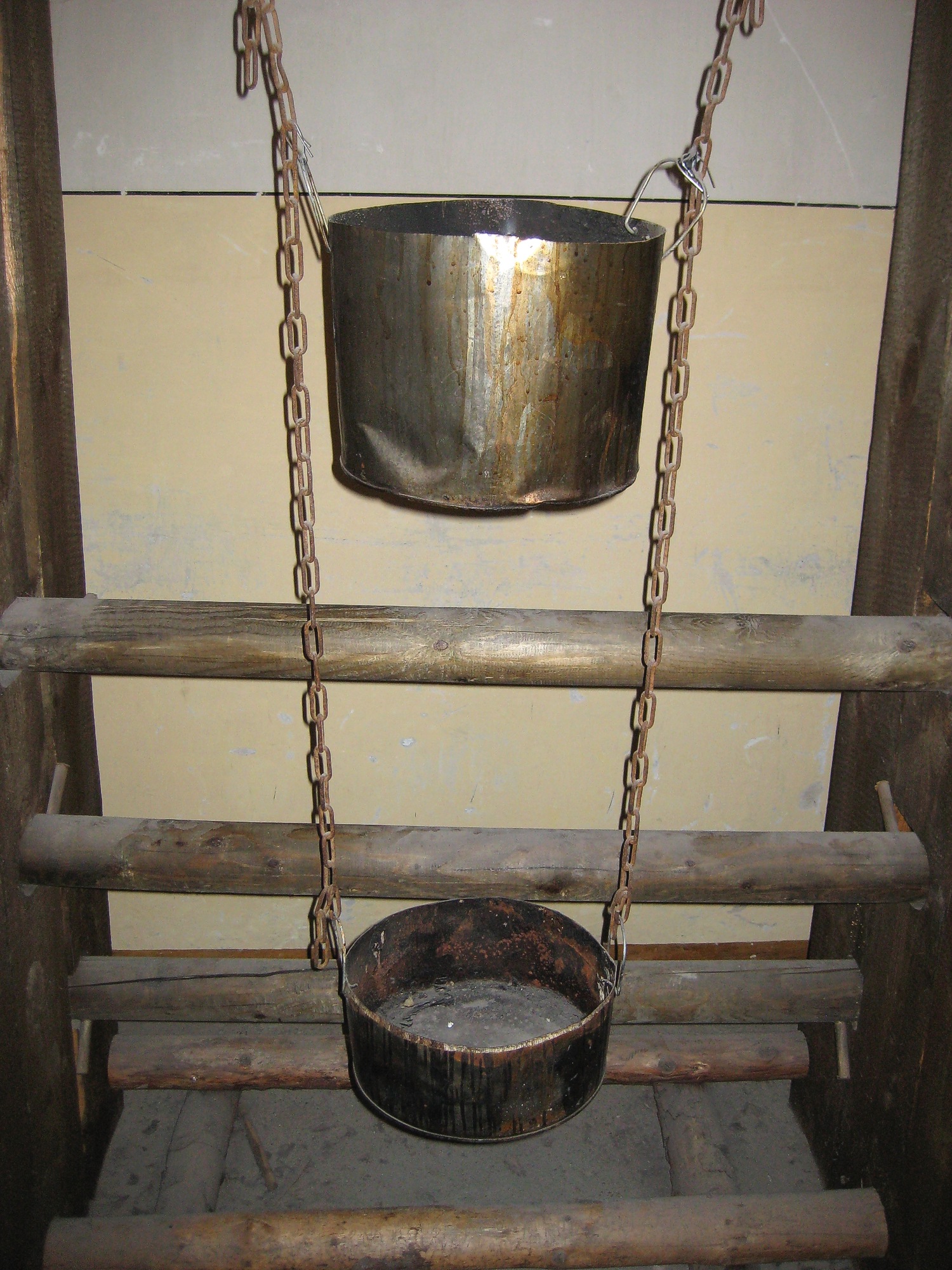
When the mother and daughter mentioned about Chinese torture, that made me think of my conversation with my friend. We were talking about Chinese torture, and it was of dripping water on the bind person’s forehead all day, all night, driving the person crazy. This is a psychological torture, well it seemed to me that it is psychological. This torture is called Chinese Water Torture. It is said that after a while, this could cause people having mental retardation. Also, there are picture listed below of torture equipment.
I thought it was wonderful that a young girl loves to play chess. This shows that even a young child could play very well if the game is in their interest area. I thought it was hilarious that Meimei used many excuses to get out of something or get her ways. Such as getting her brothers move out of the bedroom, or not eating all of her supper. This really is normal behavior of young kids.
Seeing that Meimei’s language is very good while her mother doesn’t. I think that Meimei’s mother was born and raised in Chinese. Then she moved to Chinatown in San Francisco, while Meimei was born and raised in Chinatown. It also makes me think that Meimei goes to American’s school.
I can kind of relate to Meimei on her mother showing her off. My mom does that most of the time with the people and me. Sometimes this bothers me because I do not want my mom to make people mad at me. Sometime I tell my mom to shout up. Yes, I actually do say shut up to my mom.
I thought the end of this story was very strange. I wonder why Meimei imagined her opponent as her mother? I never could imagine my mom as my opponent even if I was mad at her.
This story was not bad, it just was too detailed for me and my eyes. I kept reading on the same lines over and over. But this story made me want to learn more about Chinese’s ages to American’s ages. That’s one positive thing about this story.

Prawn picture:

Sanddabs picture:
http://www.eatsforone.com/wp-content/uploads/2007/06/citharichthys_sordidus.jpg

Chinese torture picture:

Tuesday, October 5, 2010

"The Gift of Laughter" by Allan Sherman


This story is called “The Gift of Laughter,” wrote by Allan Sherman. It was a cute story where the son, Robert, wanted his dad, Allan, to approve his art. But Allan was mad because he was having a important conversation with his wife. Robert was very upset, and left to his bedroom. In the end, they both forgave each other.
I was impressed that Allan decided to stop his conversation to pick up the art picture. Then visiting his son to get Robert to forgive him and telling his son that he thought the art was wonderful. I fell in love at the part where Allan decided to go with hi son out of the house. That Allan is taking Robert to shopping to get frame, so Allan can get the art framed.
I think the title of this story relates to Allan’s childhood where his family laughed. Also Allan’s mother laughed when Allan thought that his grandma needed football while she actually wanted was a fruit bowl. His childhood was full of laughter.
How come Allan was so stressed out that Robert was screaming? It seemed that his son always are noisy. When I read the part where grandma has a deep Yiddish accent, I wondered where exact in the foreign country was she from? I wonder which parts in the story does the “Gift” in the title applies to? I could not find it.
I totally understood the 13th-22nd lines on page 31. I could understand how Robert felt because I cry all the time and having hard time to stop. For example, when I was little girl, I got in trouble because of my friend. She is at Gallaudet University too, and I have known her for 13 years. She got me in trouble and this made the houseparent to place me in my dorm bedroom for time-out. When I was placed in my bedroom, I cried a lot. I attempted to stop crying. But I couldn’t because every time I think about me being in trouble, I cry. So I could relate to that part very well.
I also can relate to where Robert gave the art to Allan just because Allan is his father. I drew a lot when I was little girl. I always gave my arts to my parents because I loved them so much. I still do that to this day, only the difference is that I am better at drawing than I was in back then.
Once again, this story was very cute to read. I can read this story again and again, never worrying about getting bored with the story. I love this story very much, and I will always think about this story when I have children in the future.

Sunday, September 26, 2010


The story, “Dancer,” was very sad and inspiring. The little girl, Clarissa, was full of sadness and her soul was black. Learning the dance was her salvation, which had lightened her world and soul. I was and still am in love with this story.
            It was a wonderful story to read. I can relate with Clarissa pretty well. It was nice to see the woman to take in Clarissa. The woman who took Clarissa in made a right decision on letting Clarissa to learn dance. Learning dance made her a happy five years old girl.
            Reason why I could relate to Clarissa was that I had some nightmares. Only that I was three years old. I remember sleeping on my parents’ bed. In my dream, a man with a long knife chased me right over the 100-stories building. I remember the man successfully stabbed the knife into my heart in the mid-air. I remember gagging when I woke up. That was very unnatural dream for a toddler.
            The title of this story applies to me because I was a dancer. I danced for 13 years, and last June was my last dance performance. I danced Jazz and Ballet. (If you want to see what I looked like in dance, then go to the links below this blog.) Dancing made me feel free and light. So does it to Clarissa. I could understand how she felt about watching and joining the dance.
            I wondered what does “A pair of pants barely holding a crotch,” meant? Maybe that means she got second-handed pants that was too big for her. I want to know if the woman who took in Clarissa knows what Sociopath means. Maybe the woman was not that educated. How or what made Clarissa have these kinds of dreams? Why did Clarissa try to kill the cat? Maybe she had bad experience with the cats. I wonder if Clarissa was an Indian. Because she joined Powwow and might be of Assiniboine tribe.
            It was terrible to see Clarissa being like that. Being called sociopath, has no real family, and has bad dreams. She might have gone through a lot of difficult time before she came upon to the woman who took her in. Dancing must be her sanctuary. I recommend everyone to read this story. I will have some of my friends to read it.

The links to pictures and gif of me dancing.


Thursday, September 23, 2010

"A House of My Own" by Sandra Cisneros, and "Saturday at the Canal" by Gary Soto.


These two poems are called “A House of My Own,” and “Saturday at the Canal.” When I read the first poem, the woman was very happy that she got her own home, and have it all for herself. Because the way she said about several things such as that she has her pillow, purple petunias, books, and stories.

I got the feeling that this woman is elderly because she said “Nobody to shake a stick at.” The saying sounds like she has a walking cane. Most of the time, old people will set their shoes right next to their bed. She said “Only a house quiet as snow, a space for myself to go.” This also helped me to imagine her as an old lady.

I did not know what petunias was until I looked it up in the dictionary. It’s a flower, and it’s colored purple in the poem. One thing that I do not understand is what she meant by saying this, “…clean as paper before the poem.” I want to know what that saying means.

I want to know why was she so happy to have her own house and space? Why did she mention that it was not a man’s house of her dad’s house? Is it because she had horrible experiences with men? Or with her father? What kind of house did she own? If she really is an old lady? I will be so happy to find out the answers to those questions.

The second poem is about two boys (I see them as a boy, correct me if I am wrong). This part on they wanted to hitchhike reminded me of my sister. My sister hitchhiked to Mexico when she was thirteen years old. She went there because she was not happy in Michigan.

I do not understand this poem almost at all. I want to know what he meant by “The teachers were too close to dying to understand.” Does this mean that the teachers are old? “The years froze as we sat on the bank.” Does that mean that the time to them are very slow like a snail’s pace? I want to know why he wanted to be happy by age of seventeen? Why did they want to hitchhike to San Francisco? Is it because they hated the city/town/village they lived in? Why were they lonely? Is there nothing that has interesting events, and displays to keep them stay at where they live?

I did not like those two poems because the first one is too short, and vague. The second one is really hard to understand. Because I do not relate to them because I definitely am not lonely or wanting to leave my hometown. Also, that there’s many phrases that I do not understand. Only if the first poem was longer and has more descriptions. Only if the second poem is more clearer and understandable.

To me there are two common themes in the poems. Those two common themes are pursuit of happiness and escape-ness. The woman is happy to live on her own and the boys seem looking for their happiness by wishing that they leave from where they live. Both seem trying to escape from something like the woman seems to escape from people, men, and noises while the boys seem to try to escape from the loneliness.

Overall, both poems are unsatisfying to me. I want to find out more about both poems so I can quench my curiosity. The both poems deal with happiness and escape-ness.

Sunday, September 12, 2010

"Learning my Native Language,""The Hands of My Father,""Recollections."


Those three pieces have a common theme, and this common theme is oppression/struggle of deafness. But each pieces has their own theme, which is being stuck in between two worlds, no communication access, and deaf identity.
           “Learning my Native Language’s” theme is being stuck in between two worlds. The woman has difficulties in deaf and hearing world. Like when she is at hearing school, teacher will point out her mistakes on test paper because of her deafness. While at deaf college, she does not have a good signing reception
“The Hands of My Father’s” theme is no communication access. The son’s father will not sign with him. He never had signed with his son. The son wanted to be able to talk with his father but could not. “Recollections’” theme is deaf identity. The woman as a child discovered that she does not want to take any speech classes. She wants to sign only, and not speak.
           An example of struggle is the woman who writes “Learning my Native Language,” struggles with hearing and deaf worlds. The woman is hard-of-hearing. In the hearing world, she cannot catch every word hearing people say. For example, when the teacher or the student speaks, the woman sometimes misses what they say but refuses to ask them to repeat themselves because she is embarrassed of her hearing problems.  In the deaf world she cannot quite catch all of people’s signing.  Also, she entered Gallaudet University, and from there she learned American Sign Language. The ASL teacher that the woman was under is very into the deaf world and looks down on hearing people. The woman feels that she was one of them. She was late at learning sign language, so I think this is one reason why she has problems with being able to talk with deaf people. So it is a struggle for her to exist in both worlds.
In “The Hands of My Father,” the son’s father does not want to sign at all. The son is oppressed because he has no communication access with his father. Father did not like people so he is a quiet man. Also he looks at his son as if he was diseased. The son said that he felt like he was a drought to his father, because he will not try to talk with him in his natural language. He felt oppressed from it.
In “Recollections, “ the author as a little girl goes to an oral school, called Camelot, which does not allow signing. If one get caught, he or she will be punished for it. At the oral school she takes speech lessons at Camelot and Kendall. Then at her last year of elementary, she dropped the speech class. She dropped it because she does not want to talk. After she dropped the class, the speech teacher had asked her why she dropped the class, and the girl responded that she does not want to take the class. The speech teacher looked down at her after that. She rather sign language over oral because when she went to Kendall school, she said that she liked that there is full of sign language while at oral school, she felt isolated because she was not allowed to sign. This is a struggle of deaf identity at the beginning.
          Rather it’s being stuck between both worlds in “Learning my Native Language,” struggling with communication access in “Hands of My Father,” or suffering from understanding and accepting one’s Deaf identity in “Recollections.” Each of the pieces deals with oppression.

Thursday, September 2, 2010

Leaving Home: The First Day


Hello everyone, I have read the chapter called “The First Day.” It is in the book, the book title is “Leaving Home.” I am trying to not summarize the chapter. As I read through the chapter, I thought that the mother made right choice to follow the woman’s advice on getting her daughter enrolled into Walker-Jones school. This woman is member of Ebony, an advertising company, and she greets the new children Seaton Elementary School if the mother didn’t follow the advice, then her daughter probably wouldn’t have education like herself. If mother still tried to enroll her daughter into Seaton Elementary School, they still wouldn’t have accepted her daughter. This probably will also make the daughter have no education. When I was reading this chapter, it made me think about my first day of school, I felt similar to what the daughter felt. I remember when I entered with my mom, seeing many parents signing up their children to enroll in Michigan School for the Deaf (MSD). I remember feeling afraid because there were a lot of children around, and some of them were also crying and complaining. I remember my mom filling out the forms, and bringing the documents, identification, and other materials that is needed. I also thought that I was fortunate that my mom could read and write, because the process is faster. If my mom couldn’t read or write then filling out the forms would’ve lasted more longer than necessary. I was left with few questions after reading the chapter. 
Why doesn’t the mother knows how to read and write? Is it because when she was little, she was from a poor family and couldn’t afford to enroll in any school? Why did the mother stared at the teacher even though she told her daughter to not stare at people? Why did the mother became very serious with her daughter at the end of story? I wondered why the daughter kept hearing her mother’s footsteps over everything that is going on in the school? The significant of the chapter’s title is that it is all about first day at school. That the daughter was with her mother 24/7, now that she goes to school, she will see her mother less. This experience is similar to college students, they see their parents often when they are in high school. But when they become college student, they have to let go their parents. Like when the daughter kept hearing her mother’s footsteps, that is kind of like college student watching their parents leaving in the vehicle. That’s how I see it. There were few description of the characters, such as the daughter wore checkered blue and green cotton dress, with bits of yellow, white, and brown scattered on the dress. The woman from Ebony, wore pearls that is size of huge marbles and that it reaches to her navel. That’s about it.